Embedded systems & IoT
Embedded systems and IoT development, from circuit board to cloud
Most studios stop at the screen. We also build what sits on the other side of it: firmware, circuit boards and connected devices, plus the mobile app and cloud back end they report to. One team, no hand-offs between vendors.
What we do
- ESP32 and microcontroller firmware
- PCB design and hardware bring-up
- BLE, RS-485 and RTK-GPS integration
- OTA updates and device fleet management
- Companion apps and device back ends
Hardware, firmware and software as one project
An IoT product is never just a device. It is a circuit board, the firmware running on it, the radio link, the cloud that collects its data, and the app or dashboard people actually use. Each of those is usually a different vendor, and most of the bugs live in the gaps between them.
We build all of it as one team. The engineer writing the firmware knows the back end it reports to, and the person designing the API knows what the device can and can’t do with its memory, power budget and connection.
How an embedded or IoT build runs
Hardware has longer feedback loops than software, so we front-load the risky parts and test on real boards early.
-
Requirements and component selection
What the device must sense, control and survive, its power source, and how it connects. We choose the microcontroller, sensors and radios to match.
-
Schematic and PCB design
Schematic capture and PCB layout in KiCad, with design rule checks and production files (Gerbers, BOM, pick-and-place) ready for your manufacturer.
-
Bring-up and firmware
Board bring-up, drivers and application firmware in C and C++ on ESP-IDF and FreeRTOS, written to be tested and updated over the air.
-
Connectivity and cloud
BLE, Wi-Fi, RS-485 and GNSS links to a back end that stores, processes and alerts on device data, plus the mobile app or dashboard on top.
-
Field testing and fleet updates
Testing outside the lab, logging to find real-world failures, and secure OTA updates so devices in the field keep improving.
Typical embedded projects
Sensor and data-logging devices built around IMUs and environmental sensors. BLE indoor positioning and asset tracking. RTK-GPS for centimetre-level location on vehicles and drones. RS-485 links to industrial equipment and lighting controllers. Consumer devices with a companion app that pairs, configures and updates them.
If you have a device that works on the bench but not yet in the field, or a hardware idea that needs software around it, that is the kind of problem we like.
Tools we use
- ESP32 / ESP32-S3
- ESP-IDF
- FreeRTOS
- C / C++
- Raspberry Pi
- Embedded Linux
- KiCad
- BLE
- Wi-Fi
- RS-485
- RTK-GPS
- IMU sensors
- MQTT
- OTA updates
- React Native
- Node.js
- Go
- Python
Embedded systems & IoT: common questions
Do you design the PCB or only write firmware?
Both. We can design the board from scratch in KiCad, write firmware for a board you already have, or review and fix an existing design.
Which microcontrollers do you work with?
Mostly the ESP32 family (including the ESP32-S3) on ESP-IDF, and Raspberry Pi when a project needs Linux. We pick the chip for the job, not the other way around.
Can you build the app and back end for our device too?
Yes, and that is where we are most useful. Firmware, cloud back end and the iOS and Android companion app come from one team, so the protocol between them is designed once.
Can you take over firmware someone else wrote?
Usually. We start by reviewing the code and hardware, get it building reproducibly, then fix, extend or restructure it.
Do you handle certification like CE or FCC?
We design with certification in mind (pre-certified radio modules, layout and testing practices) and work alongside your test lab, but the certification itself is done by an accredited lab.
Related work
 Python 3C++Python/C++ bindings
Embedded & IoT
Construction technology startup, Europe
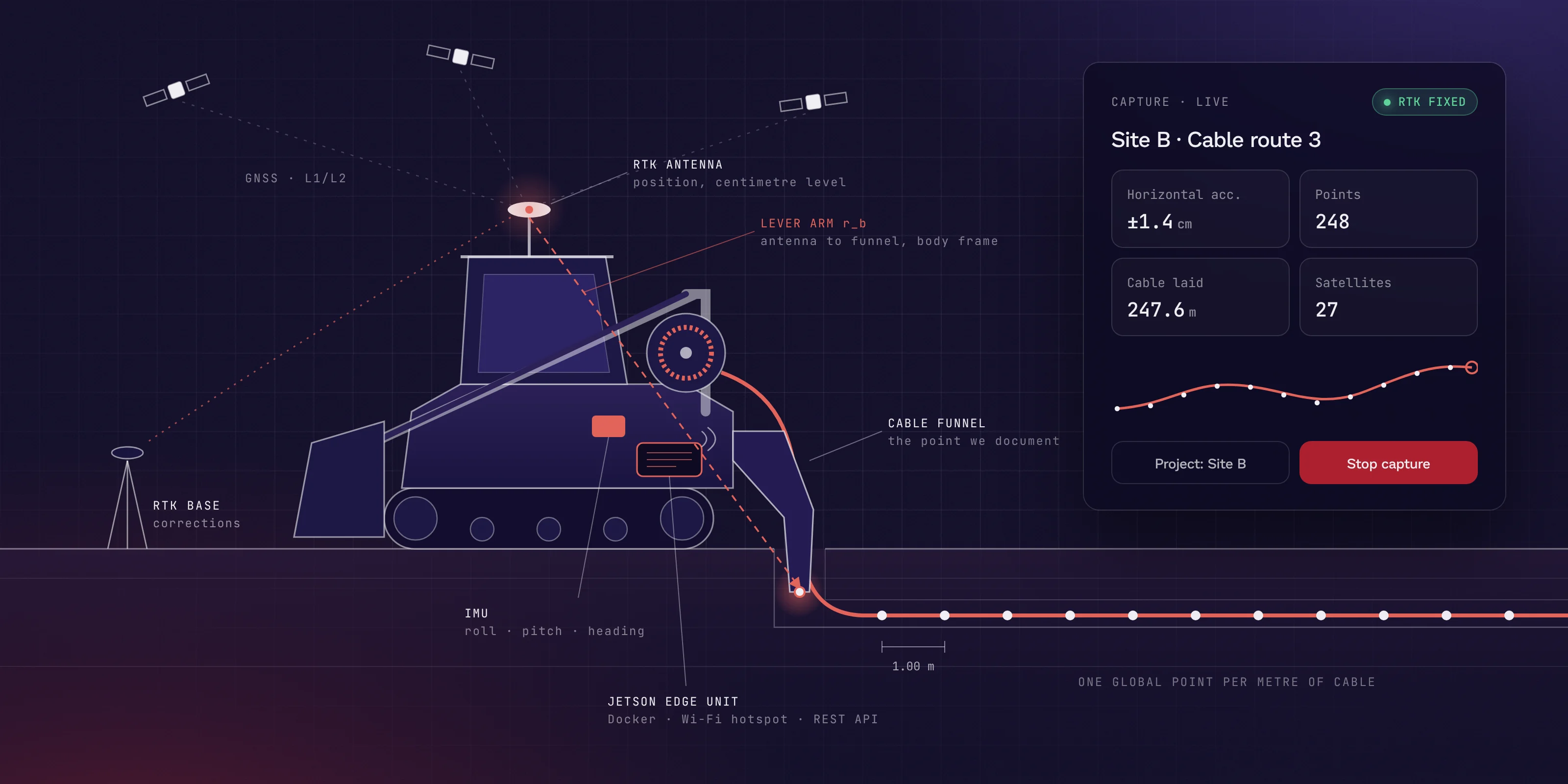
RTK-GPS cable documentation for construction machines
A machine-mounted system that records where cable goes into the ground, to the centimetre, while it is being laid. RTK-GPS and an IMU feed a C++ GPS library bridged into a Python and FastAPI service.
 ESP-IDFESP32LVGL
Embedded & IoT
Kitchen appliance startup
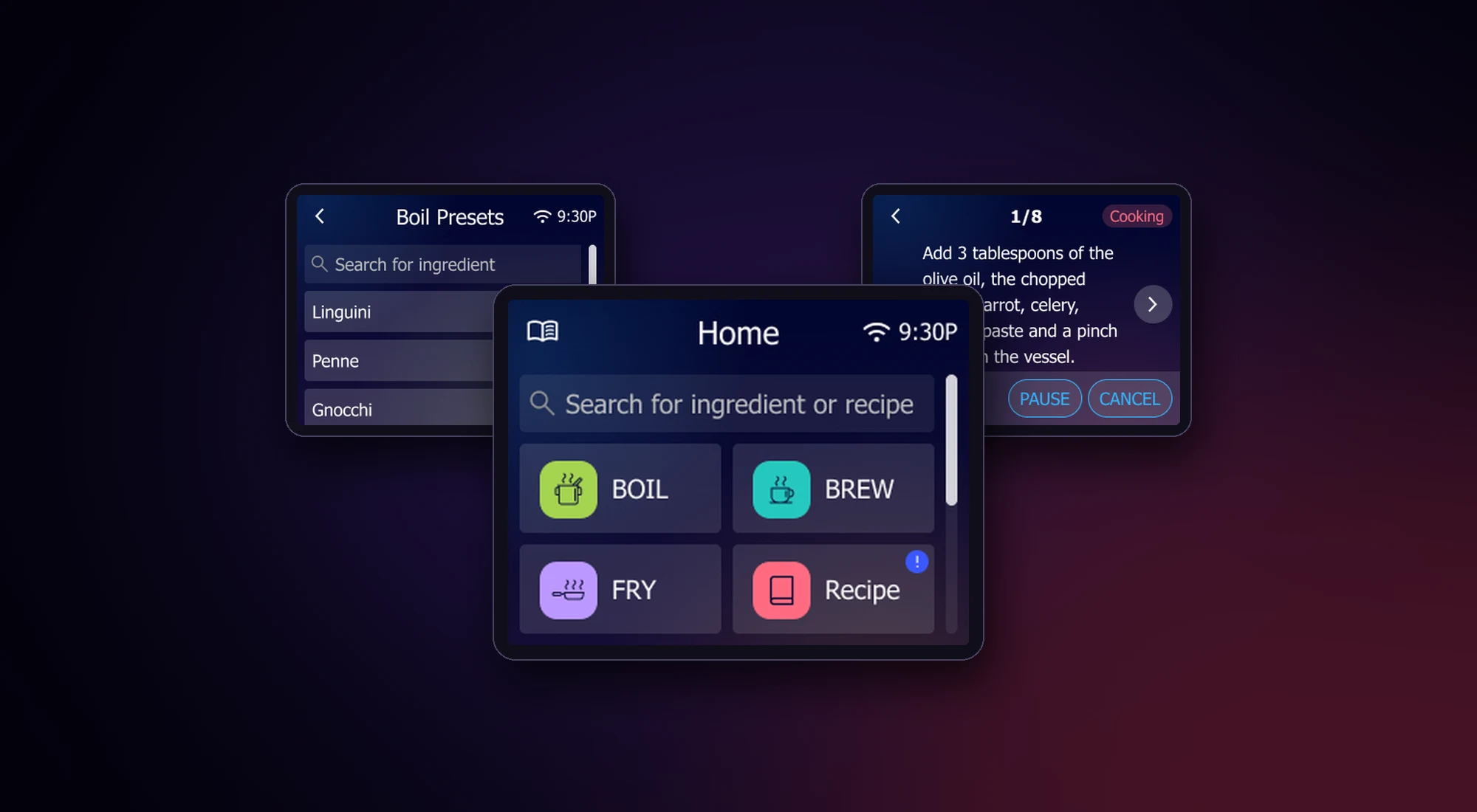
Dual-ESP32 firmware for a connected kitchen appliance
ESP-IDF firmware for a countertop appliance on two custom ESP32 boards: an LVGL touchscreen with WiFi and BLE on one, the heat plate and boiler on the other, linked over UART.