POC as a service
Proof of concept development: test the risky part first
Some ideas hinge on one risky technical question: can the model detect this, can these systems talk, will the device hold up. A proof of concept answers that question fast and cheaply, so the big decision is made on evidence.
What we do
- Feasibility studies for AI and computer vision
- Integration spikes between systems
- Hardware and sensor prototypes
- A written report on what works, what doesn’t and what it would take
What a proof of concept answers
Plenty of projects rest on one assumption nobody has tested. Can a model detect this reliably in our images? Will this sensor hold accuracy outdoors? Can these two systems exchange data fast enough? If that assumption is wrong, the rest of the budget is wasted.
A POC isolates that one question and answers it with working code or hardware, quickly and for a fraction of the full build. You walk away with evidence, not opinions, and a much better estimate of what the real project will take.
How a POC runs
Short, timeboxed and focused on a single yes-or-no outcome.
-
Define the question
We write down exactly what the POC must prove and the measurable result that counts as success.
-
Agree the timebox
A fixed duration and cost up front. If the answer arrives early, we stop early.
-
Build the smallest test
Only what is needed to answer the question: a model trained on your data, a sensor rig, an integration spike.
-
Report and recommend
A demo, the code, and a written report on what worked, what didn’t, and what the full build would need.
Typical proofs of concept
AI and computer vision feasibility on your real data. Hardware and sensor prototypes built on development boards. Integration spikes between legacy systems and modern APIs. Performance tests that show whether an architecture holds up under load. Each one is scoped to answer a single question well.
Tools we use
- Python
- PyTorch
- OpenCV
- LLM APIs
- ESP32
- Raspberry Pi
- Node.js
- Go
- Docker
POC as a service: common questions
What is the difference between a proof of concept, a prototype and an MVP?
A proof of concept tests whether something is technically possible. A prototype shows how it might look and feel. An MVP is a working product for real users. A POC usually comes first when the technology itself is the risk.
What if the POC shows the idea doesn’t work?
That is still a useful result: you found out for a small cost instead of a large one. The report explains why, and whether a different approach is worth trying.
What do we get at the end?
A working demo, the source code, and a written report with results, limitations and a realistic estimate for building the full system.
Can the POC become the real product?
Parts of it often can, but a POC is built for speed, not longevity. When it succeeds, we usually move straight into an MVP and carry over what is worth keeping.
Related work
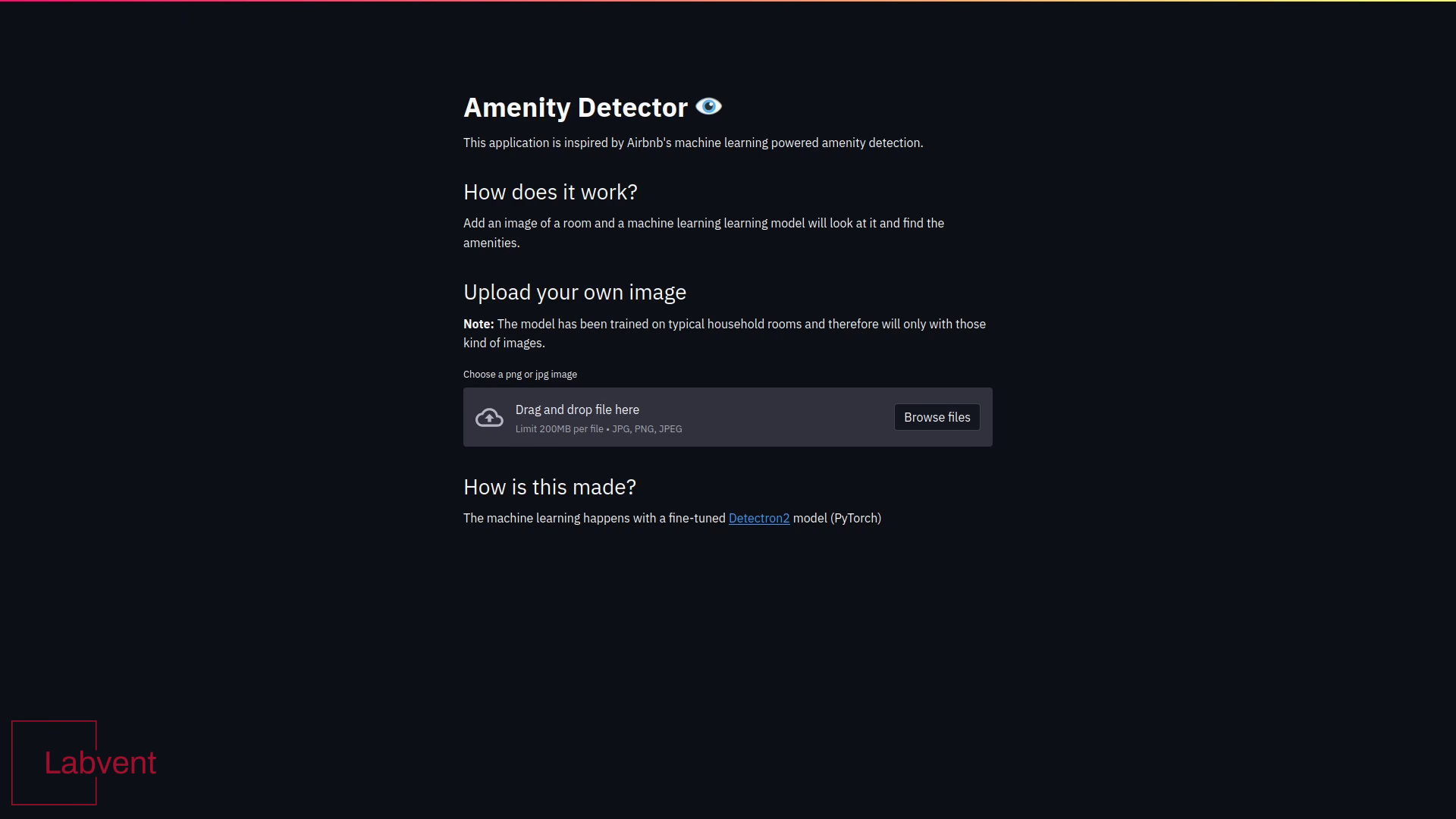 PythonPyTorchDetectron2
AI & computer vision
Real estate
Amenity detection with AI
A computer vision proof of concept that spots pools, tennis courts and playgrounds in real estate imagery.
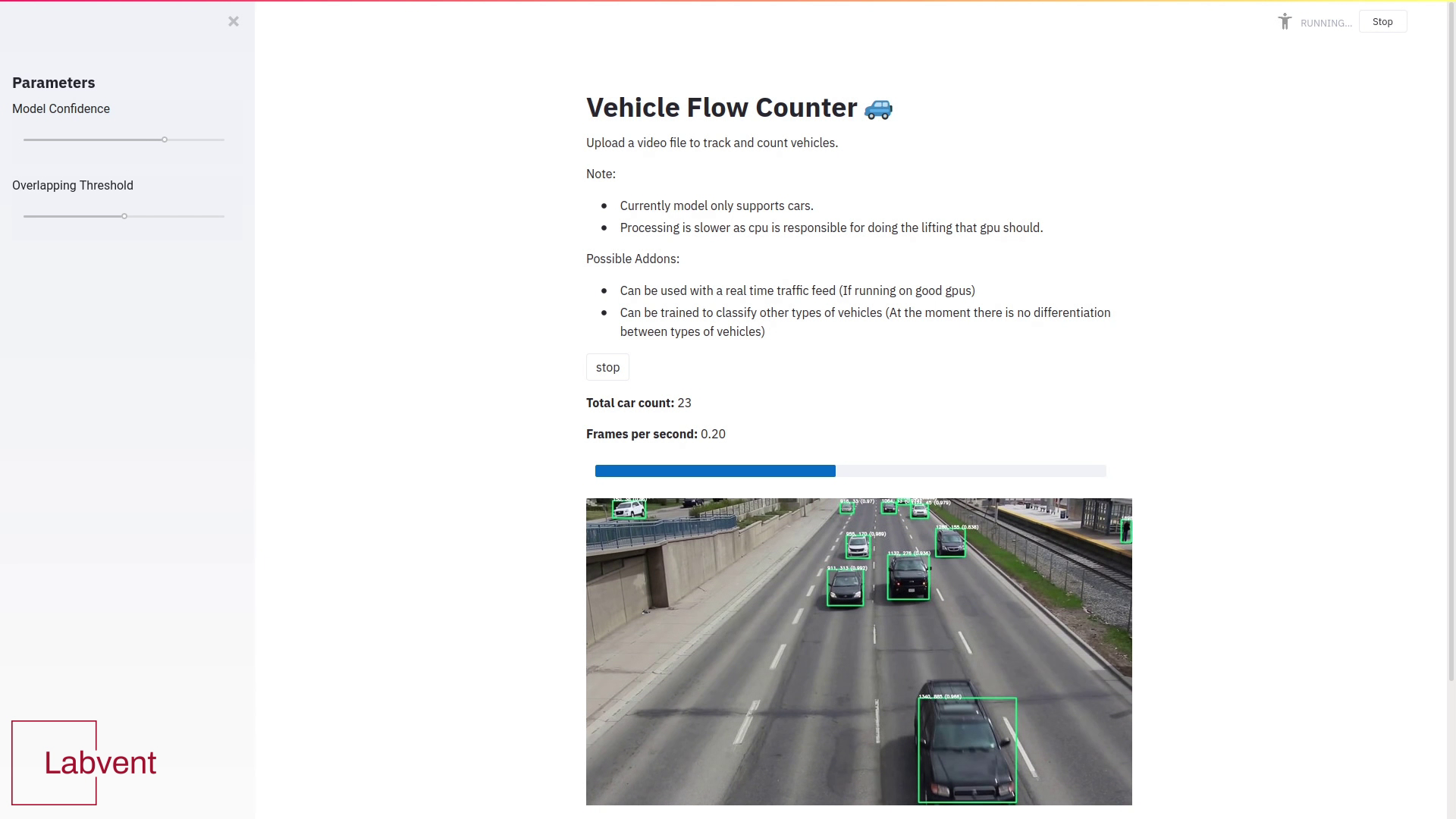 PythonOpenCVJupyter
AI & computer vision
Labvent R&D
Vehicle flow counting with computer vision
A real-time video system that counts vehicles, tracks direction and reports flow rates for traffic analysis.